AI COMPUTE•NVIDIA•GPU CLOUD•DATA CENTERS•SEMICONDUCTORS•ENERGY•FUNDING•M&A•AI COMPUTE•NVIDIA•GPU CLOUD•DATA CENTERS•SEMICONDUCTORS•ENERGY•FUNDING•M&A•
Semiconductors

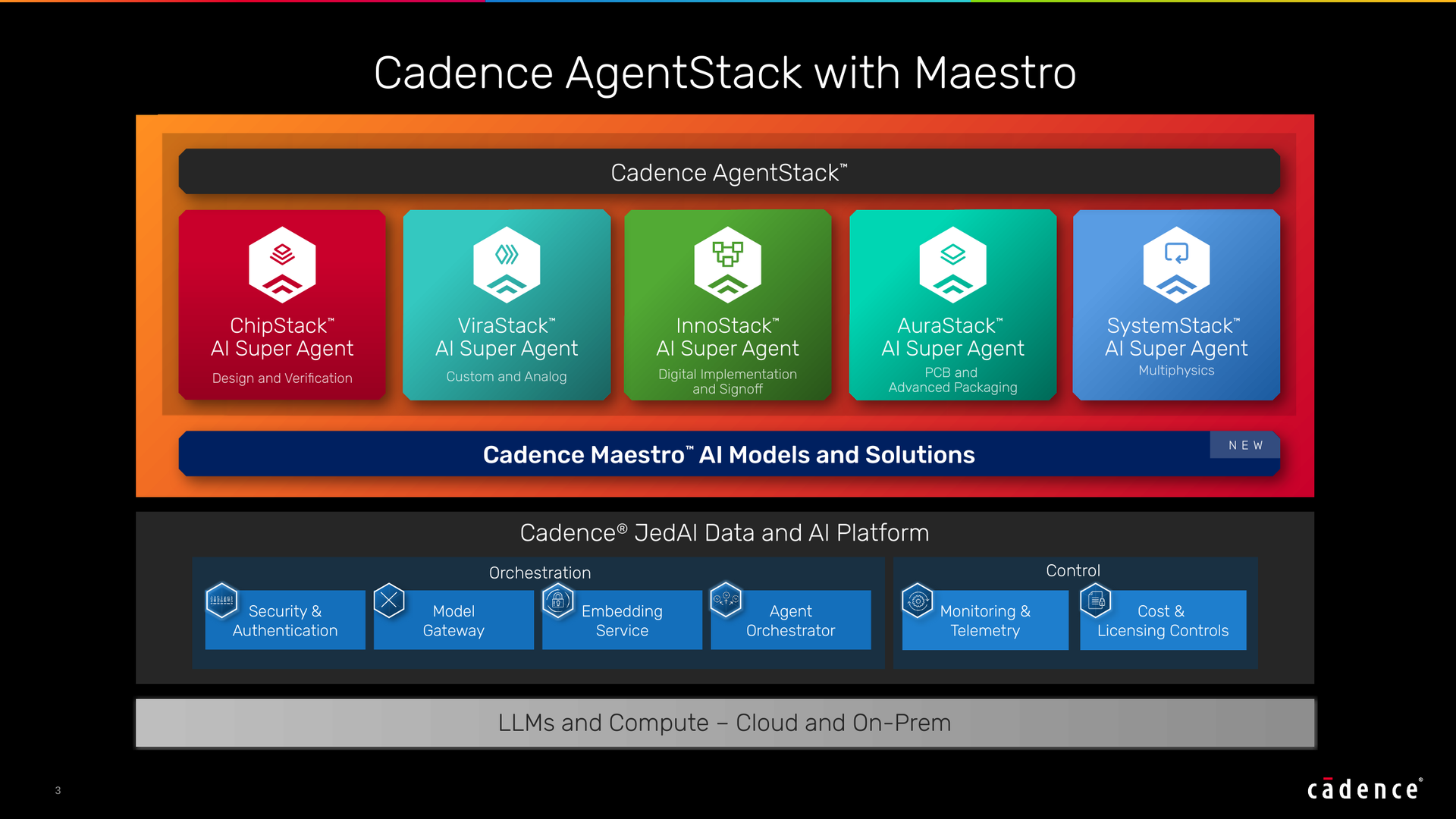
Cadence reveals Maestro, fine-tuned AI models built to run specialized chip design agents, with early access coming for 'select customers' in Q4 2026

Cadence launches specialized AI models to power automated chip engineering agents.
By GPU Data Hub Desk · GPU Data Hub·Editorial standards··United States
Cadence reveals Maestro, fine-tuned AI models built to run specialized chip design agents, with early access coming for 'select customers' in Q4 2026

Cadence has introduced Maestro, a suite of fine-tuned artificial intelligence models intended to drive automated chip design agents. The semiconductor software specialist expects to make the platform available to chosen clients through an early access programme in the fourth quarter of 2026.

Original source

This summary was written by the GPU Data Hub desk from reporting published by Tom's Hardware on 26 Oct 2026, 13:20. Read the full article at the original publisher.

Read Original Source →

By subscribing you consent to receive the daily briefing. Unsubscribe at any time. See our privacy policy.

LinkedInX

More from GPU Data Hub

Latest →

Nagare Labs Emerges from Stealth to Break AI’s Memory Bottleneck

Atlanta-based startup Nagare Labs has formally launched from stealth mode, having secured $5 million in funding led by Playground Global. The spinout is developing a novel memory tier intended to resolve throughput and bandwidth constraints in advanced artificial intelligence workloads. The architecture is engineered to unite capacity and velocity to improve performance across intensive compute environments.

Semiconductors··HPCwire

Leaked 256-core Zen 6c EPYC CPU destroys Zen 5 in early single-threaded benchmarks hints at 24% IPC gain

Unconfirmed test results for an alleged 256-core Zen 6c EPYC server processor suggest significant single-threaded performance advantages over previous-generation Zen 5 hardware. Independent frequency-normalised assessments point towards potential instructions-per-cycle gains of roughly 24 per cent alongside increased clock speeds. If verified, the architecture could mark a substantial leap forward for AMD's enterprise data-centre silicon portfolio.

Semiconductors··Tom's Hardware

Micron plans to use wafer bonding and High-NA EUV for next-gen DRAM

Micron Technology plans to deploy wafer bonding and High-NA extreme ultraviolet lithography in the production of its forthcoming dynamic random-access memory. The semiconductor manufacturer has rejected 4F2 cell designs as it prepares its process technology for the shift to three-dimensional architectures in the coming years.

Semiconductors··Tom's Hardware